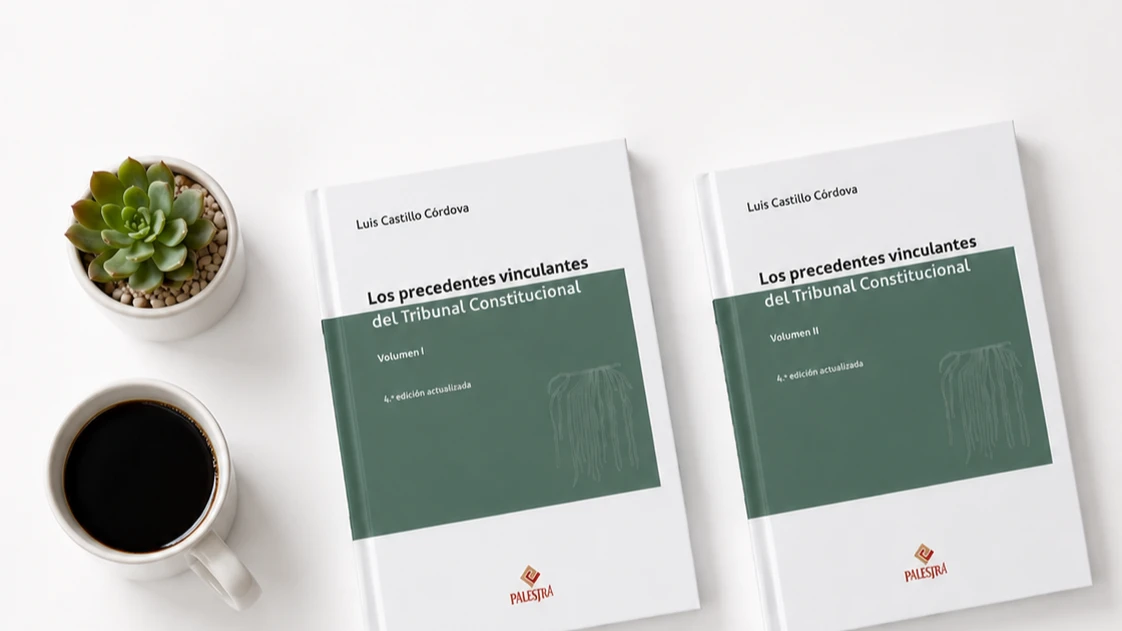
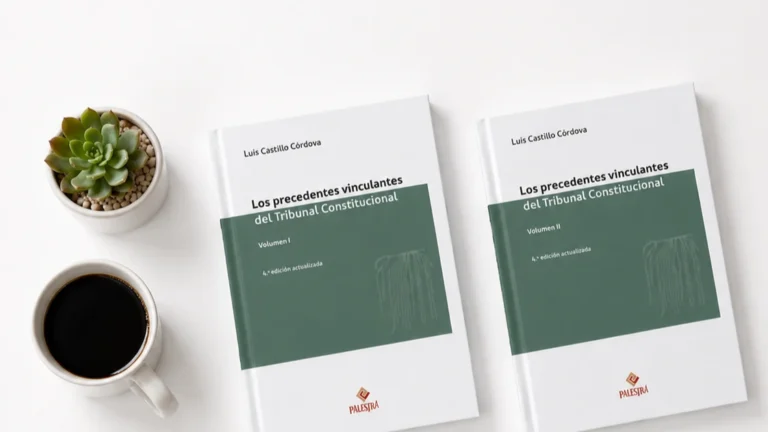
The new edition of «Los precedentes vinculantes del Tribunal Constitucional» by Professor Luis Castillo Córdova brings together, in its two volumes, the most important decisions that the Constitutional Court has declared binding. In a legal system like Peru’s, these rulings are part of the rules that every lawyer, judge or public official must apply in their daily work.
Below we present five of the precedents discussed in this work, chosen for their practical relevance and for the impact they have had on how constitutional proceedings are resolved in Peru today.
1. Lizana Puelles (Exp. No. 5854-2005-PA/TC)
Beyond resolving a specific dispute, the Lizana Puelles case is fundamental because it sheds light on the very nature of binding precedent within the Peruvian constitutional order. Through this decision, the Constitutional Court developed criteria on the binding force of its interpretations and the role they play in the work of legal practitioners. Studying it brings us closer to an essential question: why do certain decisions of the Constitutional Court transcend the specific case in which they were issued?
2. Baylón Flores (Exp. No. 0206-2005-PA/TC)
The Baylón Flores case is one of the most important references for understanding the relationship between the amparo proceeding and the protection of labor rights. This decision defined the scope of this constitutional guarantee in labor matters and established criteria that for years guided the resolution of disputes over workers’ rights. Its relevance shows how binding precedents can define the procedural paths through which people seek protection when their rights are violated.
3. Anicama Hernández (Exp. No. 1417-2005-AA/TC)
In the area of social security, the Anicama Hernández case is an essential precedent for understanding the constitutional protection of pension rights. The Constitutional Court’s decision established relevant criteria on the admissibility of pension-related claims and clarified when such disputes acquire a truly constitutional dimension. Its importance lies in connecting constitutional interpretation with one of citizens’ most sensitive concerns: protection in situations of vulnerability.
4. Valencia Gutiérrez (Exp. No. 2496-2005-PHC/TC)
The Valencia Gutiérrez case reflects the importance of habeas corpus as a tool to protect personal liberty against possible unlawful interference. Through this decision, the Constitutional Court developed relevant criteria on the scope of this constitutional proceeding and reaffirmed its role as a mechanism for the effective protection of fundamental rights. Its analysis shows how constitutional case law responds to one of the central values of the constitutional State: liberty.
5. Dirección Regional de Pesquería de La Libertad (Exp. No. 4853-2004-PA/TC)
The Dirección Regional de Pesquería de La Libertad case gave rise to one of the best-known procedural figures in Peruvian constitutional case law: amparo against amparo. This decision opened a debate on the limits and possibilities of constitutional protection against decisions issued in other proceedings of the same kind. Studying it shows how the Constitutional Court has built procedural solutions aimed at guaranteeing the effective protection of fundamental rights.
Conclusion
The five cases presented are just a sample of everything the Constitutional Court has decided with binding effect over the years. These are rules that, in practice, define how people are protected when their fundamental rights are at stake. That is why «Los precedentes vinculantes del Tribunal Constitucional» becomes essential reference material for any legal practitioner who needs to identify and correctly apply these criteria in professional practice.