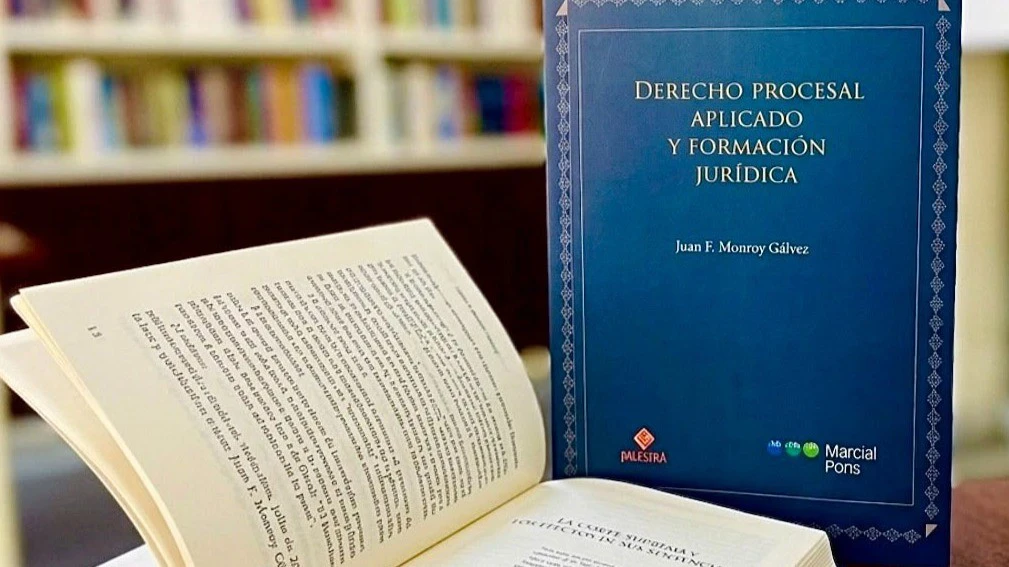
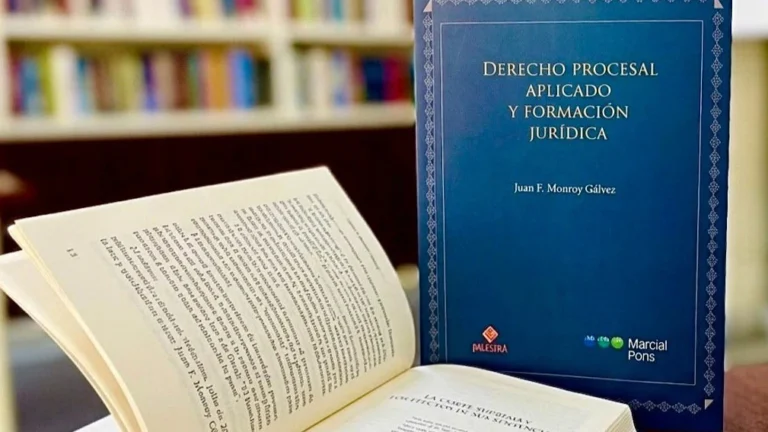
Professor Juan Monroy Gálvez presents a reference work for the Peruvian legal community: a rigorous analysis that combines the solidity of procedural theory with a critical reading of how the justice system really works. It is not a conventional textbook, but a study aimed at those who practice, teach or research law, written from the experience the author has gained over decades of academic and professional work.
The book offers a diagnosis of the current state of Peruvian justice that is as uncomfortable as it is necessary. It is organized into five chapters that address different problems of procedural law and legal education:
I. The Supreme Court and the effects of its rulings.
The author draws a precise distinction between appellate bodies and courts of last resort, classifies types of rulings by their binding force —formally normative, materially normative and binding in the strict sense— and presents a brief but illuminating history of Peruvian case-law doctrine. The chapter ends with a critique of the proliferation of figures and institutions that seek to perform a normative function within the justice system, often without enough coordination or clarity.
II. Res judicata and the authority of res judicata.
A historical and comparative overview —from German and Italian doctrine to the position of Tullio Enrico Liebman— that allows readers to clearly understand the objective and subjective limits of res judicata, the difference between its effectiveness and its immutability, and its close relationship with preclusion. It is a particularly useful chapter for understanding one of the fundamental institutions of procedural law.
III. Final judgments in tax litigation.
Perhaps the most incisive passage of the book: an analysis of the Contentious-Administrative Procedure Law contrasted with the actual conduct of the Tax Court and SUNAT during the enforcement of judgments. Monroy Gálvez supports his critique with a detailed commentary on six rulings of the Fifth Transitory Constitutional and Social Law Chamber of the Supreme Court —three from before and three from after 2024—, in an exercise of case-law analysis that combines academic rigor with immediate practical value for litigators and tax advisors. Despite everything, the chapter closes with a hopeful conclusion.
IV. Extending the subjective scope of the arbitration agreement.
A comparative study that ranges from the history of arbitration to figures such as the consolidation of arbitrations, vouching-in and the “group of companies” doctrine, including a careful examination of Articles 13 and 14 of Legislative Decree 1071. The author weighs different positions —including an original thesis by Alfredo Bullard— and reviews leading cases with conflicting positions to warn about the risks of extending arbitration to parties that did not sign the arbitration agreement.
V. The greatest challenge for Peruvian law students: learning how to learn.
The final chapter does not merely diagnose a problem; it proposes a way forward. Monroy Gálvez examines how law is taught in Peru, reviews different teaching methods —from the case method to flip teaching and PechaKucha— and analyzes the impact of artificial intelligence on legal education. To do so, he even draws on Ammon’s prediction to Socrates to reflect on memory and critical thinking. He distinguishes learning by shock, maintenance learning and innovative learning, and closes with an invitation to think slowly in an age that demands fast thinking.
Download the first pages of the book at: https://tinyurl.com/5ybkfr7m
Order it via WhatsApp at: 934 197 960