A State earns the name of constitutional State when its fundamental law achieves supremacy, normative force and, if possible, legitimacy. This includes being able to limit the actions of the other branches of government, which in turn must be able to interact with and limit one another. Accordingly, the Judiciary must have the guarantees needed to ensure independence in the exercise of its judicial function, an indispensable condition for protecting people’s rights.
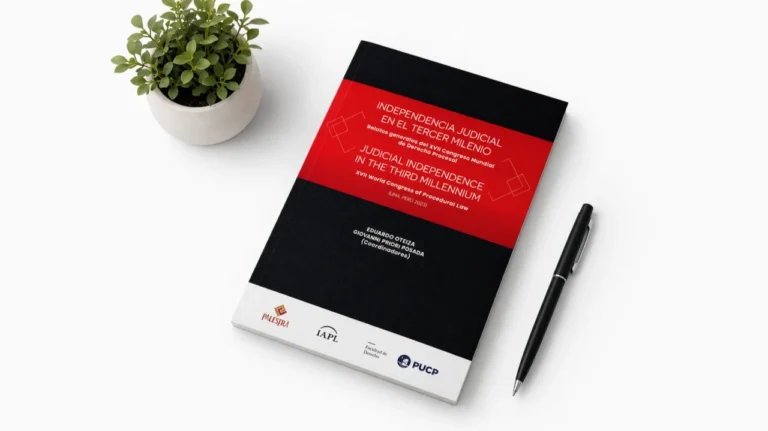
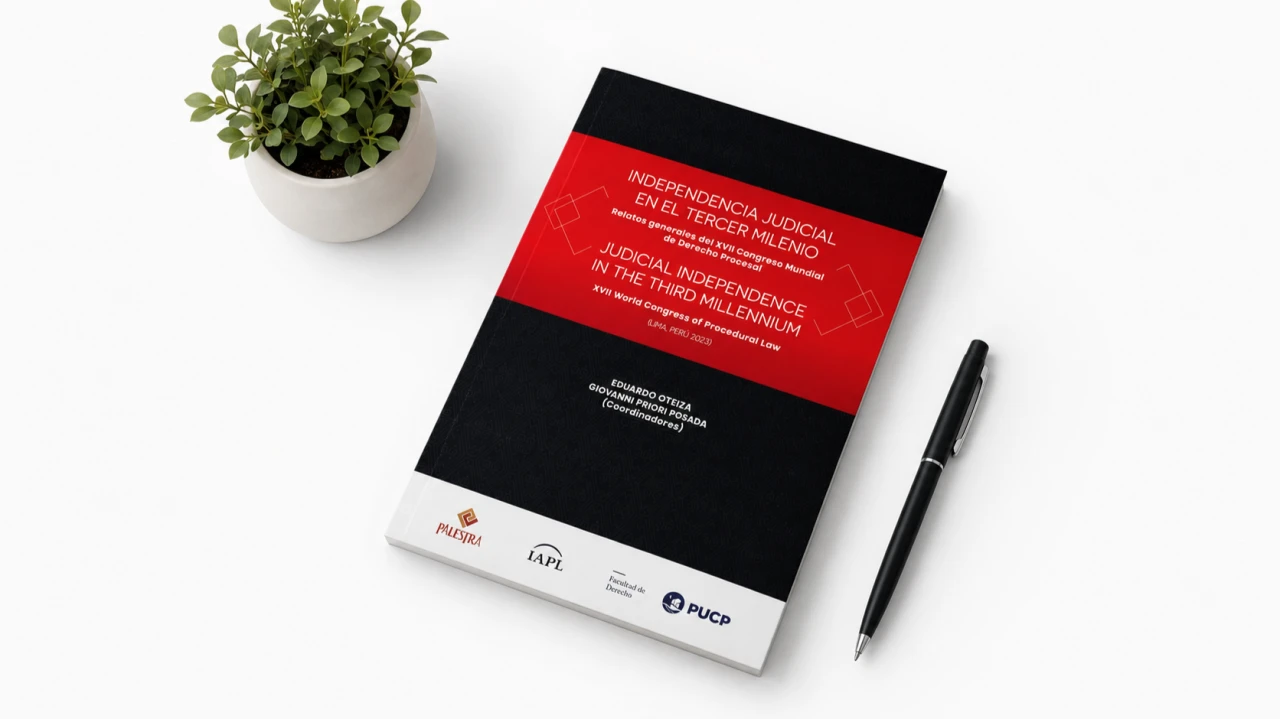
«Independencia judicial en el tercer milenio» is a book that compiles the papers presented as General Reports at the 17th World Congress on Procedural Law, held in Lima, where the authors examined the close relationship between justice and democracy, addressing topics such as the guarantees of judicial impartiality, internal tensions within the judiciary and external tensions with the other branches of government, as well as the challenges judicial systems face in preserving their independence.
On that premise, we will take as our reference the «Relato general: La independencia judicial frente a los otros poderes públicos», by Santiago Pereira Campos, in order to highlight the international indicators that reveal the problems facing the principle of judicial independence in Latin America and Peru.
In many situations, the judiciary has been people’s last hope for the protection of their rights, especially in situations of vulnerability. But the siege is immense and growing (p. 370).
With this statement begins the «Relato general: La independencia judicial frente a los otros poderes públicos». It then notes that, in different regions of the world, political projects have taken hold that gradually and systematically erode judicial independence.
This is not a matter of isolated events but of identifiable strategies: in day-to-day world politics we can see deliberate non-compliance by governments, as well as media campaigns aimed at delegitimizing judges and their rulings in the eyes of the public. Added to this are anti-meritocratic appointment policies and intimidation practices that seek to influence the outcome of judicial decisions.
The book then presents several reports stressing that these external attacks coexist with internal structural problems, such as corruption, impunity and politicization in the selection of judges and prosecutors, resulting in institutional fragility that further weakens the ability of justice systems to fulfill their functions.
What do the indicators say?
The author draws on various international measurements to gauge the current political situation, such as The Economist’s 2022 Democracy Index, which shows that only 8% of the world’s population lives in a full democracy, defined by an effective system of checks and balances and a judiciary whose decisions are respected and enforced.
The World Justice Project 2023, for its part, assessed 140 countries, whose scores show the degree to which the factors needed to guarantee transparent and effective justice are met.
Regarding civil justice, which considers whether people can access and afford the civil justice system without facing economic, procedural, physical or language barriers, and whether that system is free from discrimination based on socioeconomic status, gender, ethnicity and other factors, Peru scored 0.35 points, ranking 120th.
Regarding criminal justice , based on factors such as the effectiveness of the criminal investigation system, the speed and effectiveness of the adjudication system, the capacity of the prison system to reduce reoffending while respecting people’s rights, the impartiality of the system toward different social groups, and its independence from corruption and organized crime, among others, Peru scored 0.42, ranking 115th.
There is also the Judicial Independence Index of the World Economic Forum, which documents a drop of approximately 4.6% in perceived judicial independence in G20 economies since the global financial crisis.
Of particular relevance for the region is the Latinobarómetro 2020 finding that the Judiciary enjoys only 25% of public trust in Latin America, below institutions such as the Armed Forces (44%) or the Church (61%).
Conclusion
For many people, the judiciary is the last line of protection of their rights, especially in conditions of vulnerability, but the siege it faces is, in the author’s words, immense and growing.
This tension between the essential function of the Judiciary and the fragility of the guarantees that protect its independence is precisely the thread that runs through the whole work, in search of new proposals aimed at refining and materially improving the principle of separation of powers.