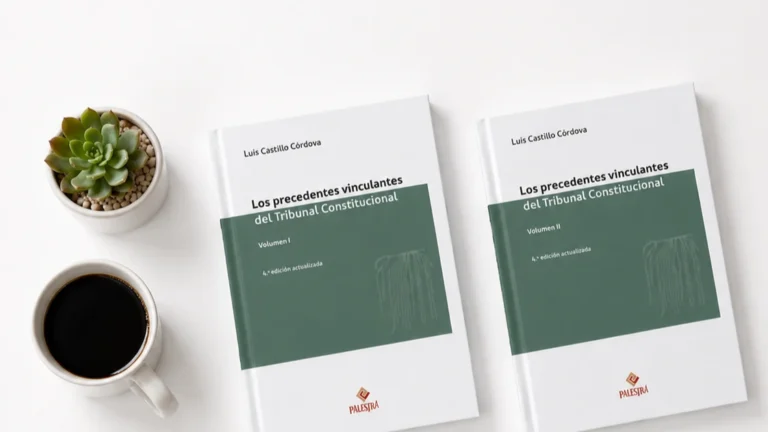
Volume I: Fundamental rights [Arts. 1 – 3]
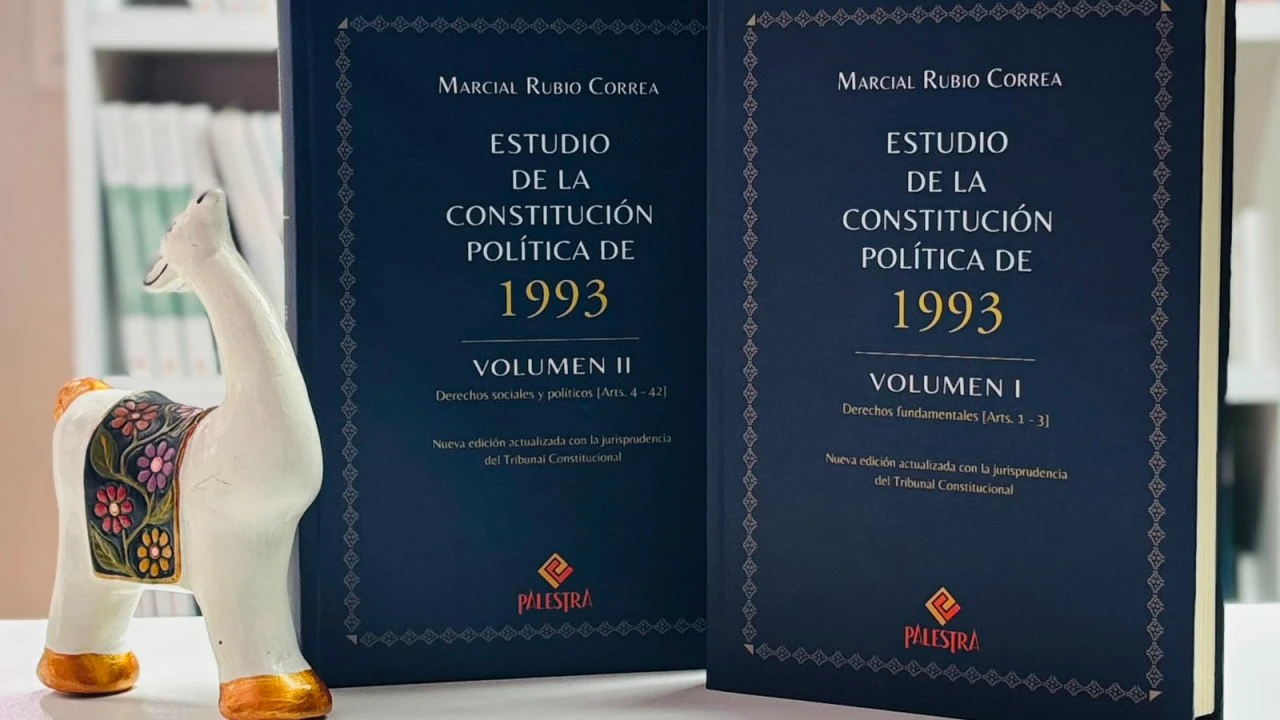
In the first volume of his work, Marcial Rubio Correa lays the methodological foundations for the study of the Constitution and rigorously examines the first three articles of the Peruvian constitutional text. From the outset he makes it clear that his purpose is not only to explain the content of our fundamental law, but to offer a way of understanding and interpreting it comprehensively, taking into account both the constitutional text and its case-law and doctrinal development.
In the first part of the work, the author explains the method he will use to analyze each constitutional provision. Although he starts from an exegetical approach, focused on a detailed analysis of each article, he does not limit his study to the literal meaning of the provisions. On the contrary, he proposes a systematic reading that relates each provision to the rest of the legal order and to the context in which it applies. To do so, he draws on different sources: the constitutional text itself, the laws that implement its provisions, case law, specialized doctrine, Peruvian constitutional history, comparative law and international human rights instruments. This initial explanation is important because it shows the approach he will follow throughout the work —including the later volumes— and that his analysis seeks to combine legal rigor with a practical view of constitutional reality.
The second part is devoted to the analysis of the first three articles. Before examining each provision, Rubio Correa includes an introduction explaining the context and function of the provisions to be discussed. This makes the constitutional text easier to understand, since it helps readers see how each provision relates to the constitutional system as a whole rather than as an isolated rule.
In this first volume, the analysis focuses on the three opening articles of the Constitution: Article 1, on the defense of the human person and respect for their dignity as the supreme end of society and the State; Article 2, which brings together and develops in detail the catalog of fundamental rights —among them the rights to life, identity, free development of personality, equality, non-discrimination, freedom of expression, honor and the inviolability of the home, among others—; and Article 3, the clause on unenumerated rights. Since these provisions are the starting point of the system of fundamental rights, their interpretation is decisive for understanding the rest of the Constitution.
One of the main contributions of this volume is that the author achieves a technical analysis without making the reading overly rigid. The prior explanation of his methodology and sources makes it easy to follow the reasoning behind each commentary and to understand how constitutional interpretation is built. In this way, this first volume offers an in-depth, detailed study of the fundamental rights recognized in the 1993 Constitution, together with the foundations of the approach that will guide the later volumes.
Social and political rights [Arts. 4 – 42]
If the first volume of this work laid the methodological foundations and opened the analysis with classic fundamental rights —life, identity, freedom of expression, etc.—, this second volume shifts the focus to another key part of the Constitution: the social, economic and political rights enshrined in the 1993 Peruvian Constitution.
With the same rigor that characterizes the entire work, Marcial Rubio Correa undertakes here an exhaustive review of Articles 4 to 42 of the constitutional text, a long stretch that groups a diverse but coherent set of rights linked to the social protection of the individual, their immediate environment and their participation in the country’s economic and public life. The analysis begins with the provisions on the family as an institution: Article 4, which establishes special protection of the family and the promotion of marriage; Article 5, on the recognition of de facto unions; and Article 6, which addresses national population policy, responsible parenthood and the principle that all children are equal before the law.
From there, the commentary moves on to health and social security: the right to health and the corresponding national policy (Articles 7 to 9), universal and progressive access to social security (Article 10), and the operation of the public and private entities that provide pension and health services (Articles 11 and 12).
This is followed by an extensive discussion of the right to education, ranging from the aims of education and freedom of teaching (Articles 13 to 17) to university education, university autonomy and the role of professional associations (Articles 18 to 20), as well as the recognition of the Nation’s cultural heritage (Article 21).
The volume also devotes considerable space to labor rights, one of the most sensitive cores of this constitutional block: work as a duty and a right (Article 22), the special protection the State owes to vulnerable people —mothers, minors and persons with disabilities— in the workplace (Article 23), the right to fair and sufficient pay (Article 24), maximum working hours (Article 25), the principles governing the employment relationship (Article 26), protection against arbitrary dismissal (Article 27), and the recognition of the right to unionize, collective bargaining and the right to strike (Article 28). Finally, the volume closes with the rights relating to the political sphere, citizenship and public service (Articles 30 to 42), thus completing the picture that runs from the individual and the family to their role as citizens within society and the State.
This is complex terrain for the constitutional scholar, since many of these rights no longer require mere abstention from the State, but active conduct in the form of services, which has historically sparked debate about their enforceability and legal nature. Rubio Correa does not avoid this discussion: by consistently applying the methodology set out in Volume I —which complements exegetical analysis with a review of organic laws, case law, doctrine, constitutional reality and comparative law— he enables readers to understand not only the letter of each article, but also its real scope and the interpretive tensions it has raised in Peruvian legal practice.
The result is a volume that combines technical rigor with the social and fundamental content of the Constitution: at stake here are rights that run through the daily lives of millions of Peruvians, from the protection of the family to access to health, education, decent working conditions and the position of citizens before the State. The breadth of the review —almost forty articles discussed in equal detail— confirms the encyclopedic ambition of the work and establishes Rubio Correa as an essential reference for understanding the constitutional text and how it actually works within Peru’s legal and social system.